
N°06 · Journal
Broye - the heart of Swiss tobacco
Three quarters of all Swiss tobacco grows here. A close look at a landscape that almost hides itself.
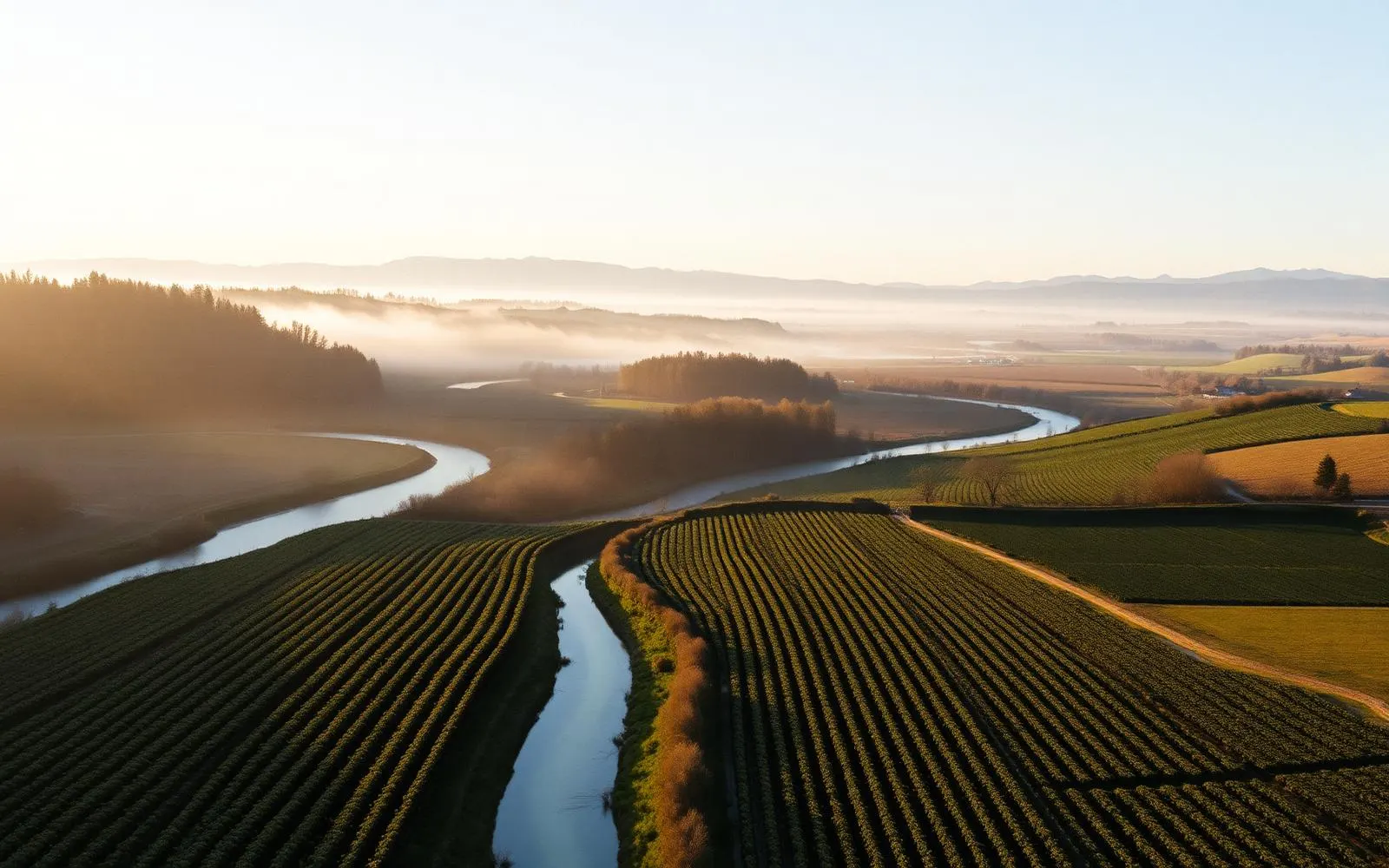
Anyone taking the train from Lausanne to Bern crosses the Broye in twelve minutes and rarely sees it. Flat, green, quiet - a landscape that doesn't push itself forward. And yet, between Payerne, Estavayer-le-Lac and Avenches, around three quarters of all Swiss tobacco grows here. Anyone who wants to understand Swiss tobacco seriously has to go into the Broye.
Why exactly here?
The answer lies in the soil. The Broye is a former marshland that was drained in the 19th century by the Correction des eaux du Jura. What remained is a rare mix of deep loam over molasse, threaded with fine sand - soils that store water without becoming swamps. Precisely what the tobacco plant needs in a cool-temperate climate.
Three microclimatic advantages add to this:
- Lake Neuchâtel and Lake Morat act as thermal buffers and soften late frosts.
- The Jura to the west brakes the wet Atlantic winds - the Broye lies in a rain shadow.
- The summer nights are cool - decisive for the concentration of aromatic compounds.
The growers
There are fewer than 80 active tobacco growers in the Broye today. Most run family farms in their second or third generation, often with only 1 to 3 hectares of tobacco alongside sugar beet, wheat and maize. Tobacco is not a monoculture business - and that is its strength. Rotation with root crops keeps the soil alive and reduces disease pressure without chemicals.
The region is coordinated by the SOTA (Société de Tabac), a cooperative that organises seed, purchase guarantees and quality control. A model largely unique in Europe.
The variety: Burley rules
Over 80 percent of Broye production today is Burley. The pale, air-cured variety feels at home on loamy soils: deep taproots find water, the cool nights brake sugar production and push the aroma toward something savoury and nutty. Smaller quantities of Virginia grow alongside, and occasionally Maryland for the Stumpen production.
Burley from the Broye tastes different from Kentucky Burley - quieter, cooler, less woody. It is a northern European accent in a variety usually thought of as southern.
The curing barns
Anyone driving through the Broye in September sees them everywhere: long, narrow wooden barns with movable wall slats that are opened or closed according to the weather. These séchoirs are the region's most visible symbol. Many are over a hundred years old, some are listed monuments. They work on the same principle as 150 years ago: wind, patience, the right timing.
What the Broye teaches us
The Broye is a lesson in what terroir really means. It is not just geology. It is the sum of soil, climate, variety choice, craft and people who know what they are doing - and know when to do nothing.
When you taste the dominant share of Swiss Burley in one of our blends, you are tasting this landscape. The loam, the wind, the patience of the growers. Read further on Swiss terroir and Burley from Switzerland.