
Knowledge - 04
Virginia and Burley. Two varieties, two characters.
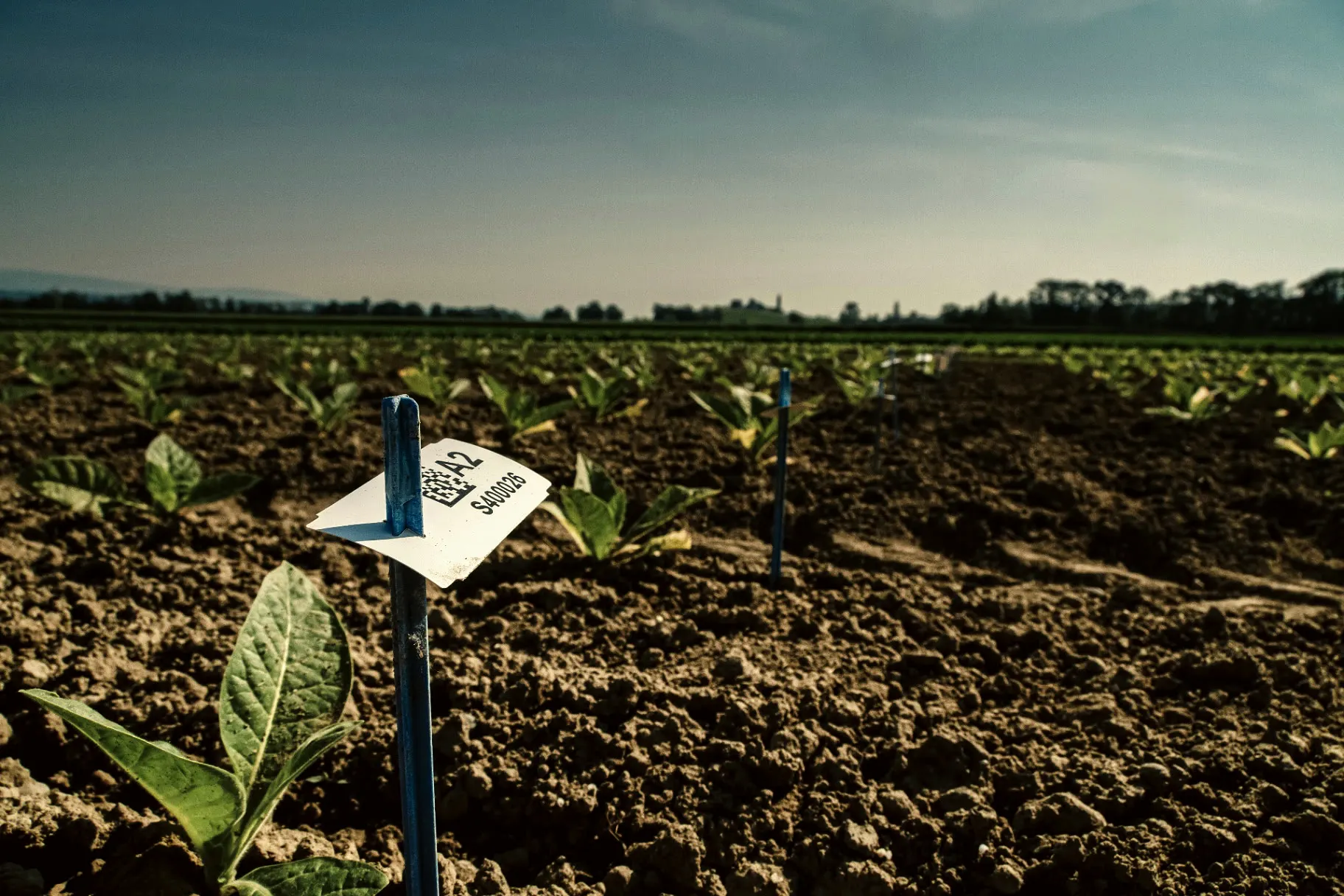
Practically only two tobacco varieties grow in Switzerland: Burley and Virginia. Both are globally widespread, both look similar to outsiders, yet they produce two completely different smoking profiles. This page explains where the varieties come from, how they differ, and why Heimat needs both.
Definition
Virginia and Burley are two cultivated forms of the tobacco plant Nicotiana tabacum. They differ genetically, in growth habit, in drying method, and above all in taste. Swiss growers cultivate both varieties today - about two thirds Burley, one third Virginia.
01
Where both varieties come from
Virginia and Burley are not random names. Both carry their region of origin in their name.
Virginia tobacco originated in the 17th century in the US state of Virginia. English settlers experimented with milder varieties than the indigenous Nicotiana rustica. These experiments led to Bright Leaf - a light, sweet tobacco that became the standard base for cigarettes worldwide. Today, Virginia is grown in over 100 countries, from Brazil to Zimbabwe.
Burley was discovered in 1864 in Brown County, Ohio. A farmer named George Webb noticed that a plant in his field bore light, almost white leaves. This accidental find was a mutation with significantly lower chlorophyll content. This gave rise to White Burley - the basis for all current Burley varieties and the most important tobacco for pipe blends and American-Blend cigarettes.
Both varieties arrived in Switzerland about 150 years ago via France and Germany. Growers in the Broye Valley had previously cultivated local landraces, which largely disappeared in the 20th century. Today, Burley is the more common variety because it ripens more reliably in our climate.
02
In the Field: Growth and Care
The plants look similar but require different attention.
Virginia grows more compactly, with smaller, darker leaves. The plant is sensitive to rainfall - too much water dilutes the sugar content, too little makes the leaves tough. Virginia needs warm summer nights; in cool years, the leaves do not reach their full maturity.
Burley grows taller - up to 2.20 meters - with large, fleshy, light green leaves. The plant is more robust against fluctuations and copes better with cooler nights. This is precisely why Burley accounts for the larger part of the Swiss harvest: the Mittelland climate suits it.
Both varieties are hand-planted in the field from May, hoed, checked for pests, and topped in summer - the flower head is cut off so that the plant puts its energy into the leaves. The lowest leaves ripen first, then stage by stage upwards. Harvest time is from July to September.
In the Broye Valley climate, Burley is the more reliable variety. Virginia needs more sun and more luck.
03
Air-Cured vs Flue-Cured: the crucial difference
What finally separates both varieties is not the field, but the drying process.
Burley is air-cured - air-dried. The leaves hang for four to eight weeks in open wooden barns, where air, temperature, and humidity fluctuate naturally. During this time, the plant breaks down almost all remaining sugar. The result: a low-sugar, neutral tobacco with a high capacity for absorbing flavors and therefore so popular in the industry as a casing carrier.
Virginia is flue-cured - dried by heated air. The leaves hang for three to six days in closed drying chambers, where the temperature is gradually raised to up to 75 degrees. This controlled heat fixes the natural plant sugar before it is enzymatically broken down. The result: a light yellow, distinctly sweeter tobacco with high sugar content.
Both drying methods require different infrastructure. Burley growers have open tobacco barns with characteristic ventilation slots - many of which characterize the landscape in the Broye Valley. Virginia drying chambers are smaller, closed, and more energy-intensive.
04
Flavor Profile in Comparison
The difference in smoke is clear - once you know what to look for.
Burley is earthy, nutty, slightly tart. Natural Burley is reminiscent of dark bread, walnuts, dried herbs. The finish is dry, with a slight bitterness that is not disturbing but gives structure. Burley burns slowly and evenly.
Virginia is bright, sweetish, fruity. Natural Virginia tastes of dried hay, ripe apples, sometimes honey. The natural sweetness comes from the sugar that is preserved during heat drying - not from additives. Virginia burns brighter and faster than Burley.
In industrial cigarettes, the casing layer almost completely masks these differences. Burley then tastes of vanilla or cocoa, Virginia of artificially enhanced sweetness. In natural blends like Heimat, varietal characteristics are retained - the smoker can actually taste whether there is more Burley or more Virginia in the blend.
Burley like dark bread. Virginia like ripe apples in straw.
05
Why Heimat combines both varieties
A pure Burley cigarette would be too earthy, a pure Virginia too sweetish. The blend is the tool.
Heimat uses both varieties in a balanced blend. Burley provides body, depth, and the characteristic earthy base note. Virginia brings brightness, natural sweetness, and the aromatic volume that makes a cigarette approachable. The exact proportions remain a trade secret, but the ratio clearly emphasizes Burley.
This combination has been the basic principle of the so-called American-Blend cigarette for decades - in contrast to pure Virginia cigarettes of English tradition or the oriental-influenced blends of the Mediterranean region. Heimat stands in this American-Blend tradition, but uses exclusively Swiss raw tobacco.
Because both varieties ferment for 18 to 24 months, their characters merge in storage. Fresh Burley and fresh Virginia taste more separate side by side than after two years of common maturation. This intertwining is precisely what defines the Heimat taste.
06
Virginia and Burley in Switzerland today
Not every region of Switzerland grows both varieties.
Burley dominates in the Broye Valley. The cool, damp nights of the region and the calcareous clay soils produce Burley leaves with great depth of flavor. Around 70 percent of Swiss Burley production comes from this valley between Vaud and Fribourg.
Virginia is more frequently cultivated in warmer, drier areas - for example, in the Ticino, in the St. Gallen Rhine Valley, or in parts of Aargau. Even there, Virginia is the minority variety, but the quality is good enough to be included in most Swiss blends.
Growers do not arbitrarily switch between varieties. A farm that has built up Burley experience over decades knows its drying barns, its fields, its soil. This specialization is one of the reasons why Swiss tobacco is consistently characteristic in international comparison - even though it grows on only 450 hectares.
Frequently Asked Questions
Virginia and Burley in Detail
The drying. Virginia is heat-dried (flue-cured) and retains natural sugar. Burley is air-dried (air-cured) and loses almost all sugar in the process. This makes Virginia taste bright and sweetish, Burley earthy and neutral.
Burley. About two-thirds of the Swiss tobacco harvest is Burley, one-third Virginia. Burley copes better with cooler summer nights, which is an advantage in the Mittelland and the Broye Valley.
Both varieties complement each other. Burley brings body and depth, Virginia brings brightness and natural sweetness. A cigarette made from only one variety would either be too earthy or too sweetish - the blend creates the balance.
Burley generally contains more nicotine than Virginia, but 'strength' is not just a question of nicotine. Burley often seems more potent when smoked because it tastes less sweetish and more earthy. Pure strength, however, also depends on the variety, harvest year, fermentation, and blend.
Heimat uses both varieties exclusively from Swiss cultivation, with a focus on Burley. The exact blending ratio is part of the recipe.
Flue-cured means heat-drying in closed chambers (Virginia, 3-6 days, up to 75 degrees). Air-cured means air-drying in open barns (Burley, 4-8 weeks, ambient temperature). Both processes are not preservation, but active processing of the leaf.
To a very small extent, Oriental varieties (such as Basma or Samsun) are grown experimentally. However, only Burley and Virginia are economically relevant.
Read more