
Knowledge - 05
Honest Tobacco. Not a slogan, but accounting.
The term 'honest tobacco' is used to an inflationary degree. At Heimat, it refers to a concrete set of specifications: what is not included, what is demonstrably documented, and which steps remain verifiable. This page dissects the term.
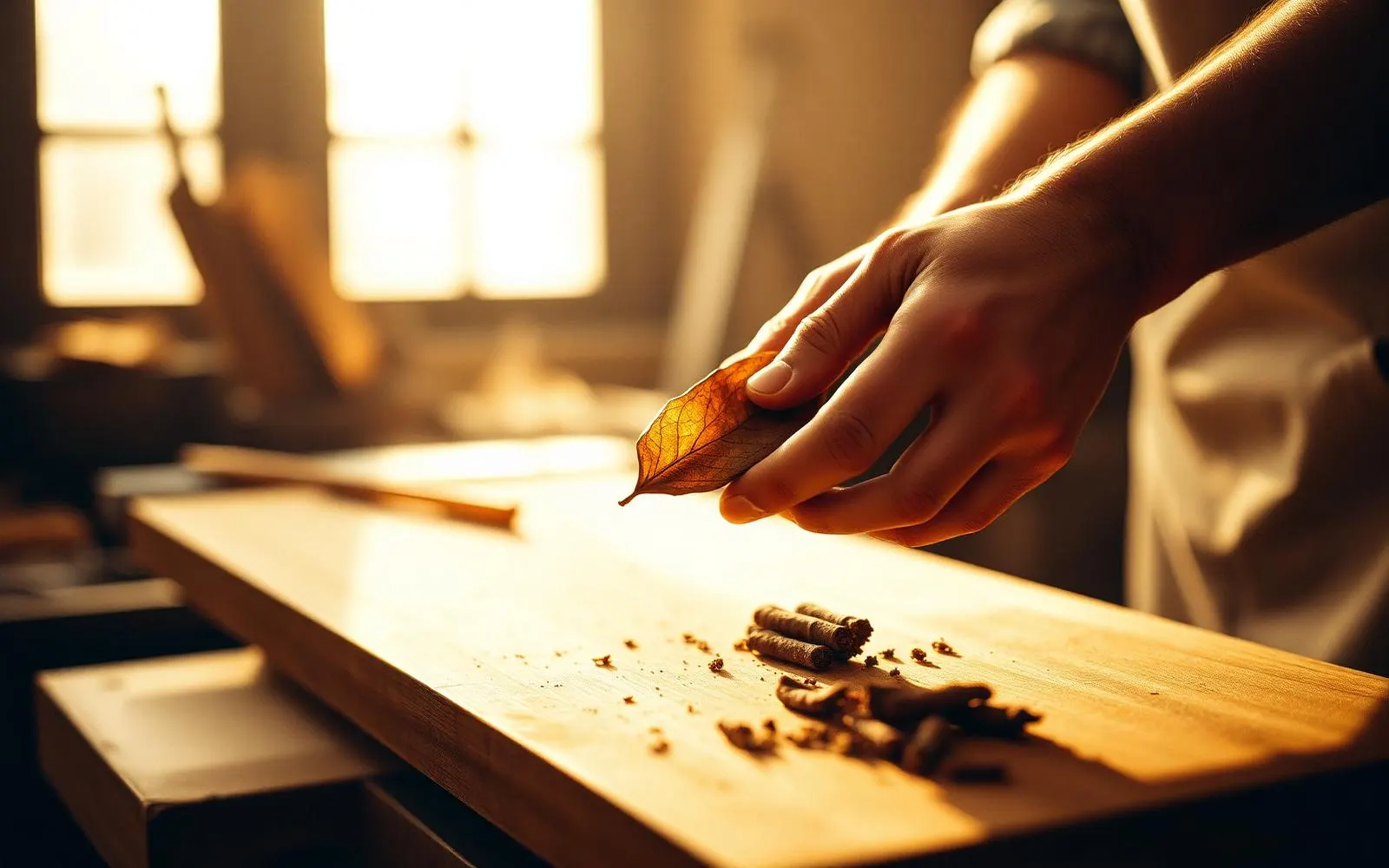
Definition
At Heimat, honest tobacco means: no casing, no artificial flavors, no added sugar, no glycerin, no combustion accelerators, no imported blended tobaccos. Every processing step from seed to cigarette is documented and traceable.
01
What the term promises and where it becomes hollow
'Honest', 'natural', 'authentic' - words without legal definition. Heimat takes them literally or not at all.
Tobacco advertising has used the term 'honest' for decades. In most cases, it means nothing verifiable: no ingredient list, no supply chain, no additive declaration. The term creates a feeling that has little to do with the reality of the product.
Heimat has decided to use the term only when every statement behind it can be individually substantiated. If a Heimat pack says 'without casing', the production log contains a note to that effect - including date, batch, and responsible party. If it says 'Swiss tobacco', the delivery notes from the growers are in the archive.
Honesty is therefore not a value level, but a matter of administration. Those who do not keep accounts cannot be honest - they can only claim to be.
02
The list of renunciations
Industrial tobacco products regularly contain hundreds of additives. Heimat completely renounces the following categories.
No casing: no sweet-spicy solution of sugar, glycerin, cocoa, licorice or flavor mixtures, which is applied in the industry to fermented tobacco leaves to equalize taste.
No artificial flavors: neither synthetic nor so-called nature-identical aroma concentrates. The taste comes exclusively from variety selection, cultivation, and fermentation.
No added sugar: no additional sugar to increase natural sweetness or mask sharpness. Any sweetness in the smoke comes from the plant sugar of Virginia tobacco.
No glycerin and propylene glycol: no humectants to keep the leaf pliable or make the smoke seem smoother. Instead, Heimat uses mountain spring water as a pure processing aid.
No combustion accelerator: no chemical additives to ensure even burning. Heimat cigarettes burn as naturally grown tobacco burns - sometimes a little unevenly.
No imported blended tobaccos: every leaf comes from Swiss cultivation. There is no 'Swiss tobacco with a little Brazil for stability' - that would not be honest, that would be an industrial product with a Heimat label.
Honest means first: omit what can be omitted, without proving to oneself that it must be done.
03
Full origin, from the plot onwards
Heimat can state for each batch from which growers the tobacco comes - in which year, on which field.
The approximately 45 growers who supply Heimat are documented by name. Each delivery is recorded with variety, harvest year, field number, and delivery note. The warehouse in Payerne continues to track this data in parallel with the fermentation batches.
This level of traceability is unusual in the global tobacco industry. For an average industrial cigarette, the cultivation countries in the blend change from quarter to quarter - the consumer never knows whether their tobacco comes from Malawi, Brazil, or India.
Heimat also documents the region - 75 percent from the Broye valley, the rest from Aargau, Thurgau, St. Gallen, and Ticino. Anyone who wants to know from which farm a specific batch came can inquire.
04
Documented processes: Fermentation and Manufactory
Not only raw materials, but also processes are recorded.
In the Payerne fermentation warehouse, each batch runs for at least 18 months. Temperature, humidity, and rotation cycles are documented. Those who smoke a Heimat tobacco from the 2024 vintage are smoking a leaf with a readable history.
In the manufactory in Steinach on Lake Constance, the fermented leaves are moistened with mountain spring water, cut, and blended. The machines are small and old - not for romantic reasons, but because large industrial plants would be neither economical nor suitable for our quantities.
Here too, each batch is logged. Which grower deliveries are in which blend, when it was blended, who performed the quality control. This data is not a secret, but a prerequisite for being allowed to use the term 'honest' at all.
05
What honesty costs
Renunciation and documentation are not cost-neutral.
Swiss tobacco is significantly more expensive to buy than imported goods. Growers in the Broye valley are compensated differently than contract farmers in emerging countries. This is intentional - cheap tobacco is an indication of an exploitative supply chain, not efficiency.
Long fermentation ties up capital. Tobacco stored for 18 to 24 months is in the warehouse, not for sale. This time costs money, which is reflected in the selling price.
Renouncing casing costs flavor stability. Natural blends do not taste the same between vintages. Those who expect industrial-level consistency will have to adjust. Those who seek character will gain.
Heimat is therefore not a cheap product - it is a documented product at a realistic price.
Honest selling usually means: not at the lowest price.
06
How to verify honesty
Three concrete questions that can be asked of any tobacco brand - not just Heimat.
First question: What is on the ingredient list? Truly natural manufacturers specifically list renunciations. 'Without casing, without flavors, without added sugar' is verifiable. 'Natural' or 'traditional' is not.
Second question: Where does the tobacco come from? Those who do not name a region, varieties, or a vintage either have something to hide or do not know themselves. Both are a warning sign.
Third question: How long is it fermented? Industrial quick fermentation takes a few weeks. Classic warehouse fermentation takes 18 months or more. Those who provide no information or evade the question likely do not ferment classically.
07
What honesty costs
Renunciation and documentation are not cost-neutral.
Swiss tobacco is significantly more expensive to source than imported leaf. Growers in the Broye valley are paid differently than contract farmers in emerging markets. That is intentional - cheap tobacco signals an exploitative supply chain, not efficiency.
Long fermentation ties up capital. Tobacco aged for 18 to 24 months sits in the warehouse rather than on sale. That time costs money, and the cost flows into the retail price.
Skipping casing costs flavour stability. Natural blends do not taste identical from one vintage to the next. Anyone expecting industrial-level consistency will need to adjust. Anyone looking for character gains.
Heimat ist daher kein günstiges Produkt - es ist ein dokumentiertes Produkt zu einem realistischen Preis.
Honest selling usually means: not at the lowest price.
Frequent Questions
Honest Tobacco in Detail
A concrete set of specifications: no casing, no artificial flavors, no added sugar, no glycerin, no combustion accelerator, exclusively Swiss raw tobacco, and a fully documented supply chain from grower to cigarette.
'Natural' is not legally defined and is used to an inflationary degree. Honest means every single statement is internally verifiable and provable upon request.
Yes. The renunciation and documentation requirements apply equally to every Heimat batch, regardless of the specific blend or vintage.
The production documentation in Steinach is internally traceable and accessible for external audits. Heimat deliberately refrains from advertising with evidence that consumers cannot verify, and openly addresses questions about ingredients at any time.
Swiss raw tobacco is valued higher in purchasing, long fermentation ties up capital, and natural processing has lower economies of scale. The price reflects this reality.
Every tobacco combustion is harmful to health, and this also applies to Heimat. Natural means only that no additional combustion products from additives are created. It does not mean that smoking becomes harmless.
Heimat seeks a replacement within the existing growers' association. The region remains the same - imported tobacco is never added to the blend unannounced.
Vertiefung
Im Journal weiterlesen
Read on