
N°02 · Journal
Why fermentation matters more than technique
On what cannot be sped up.
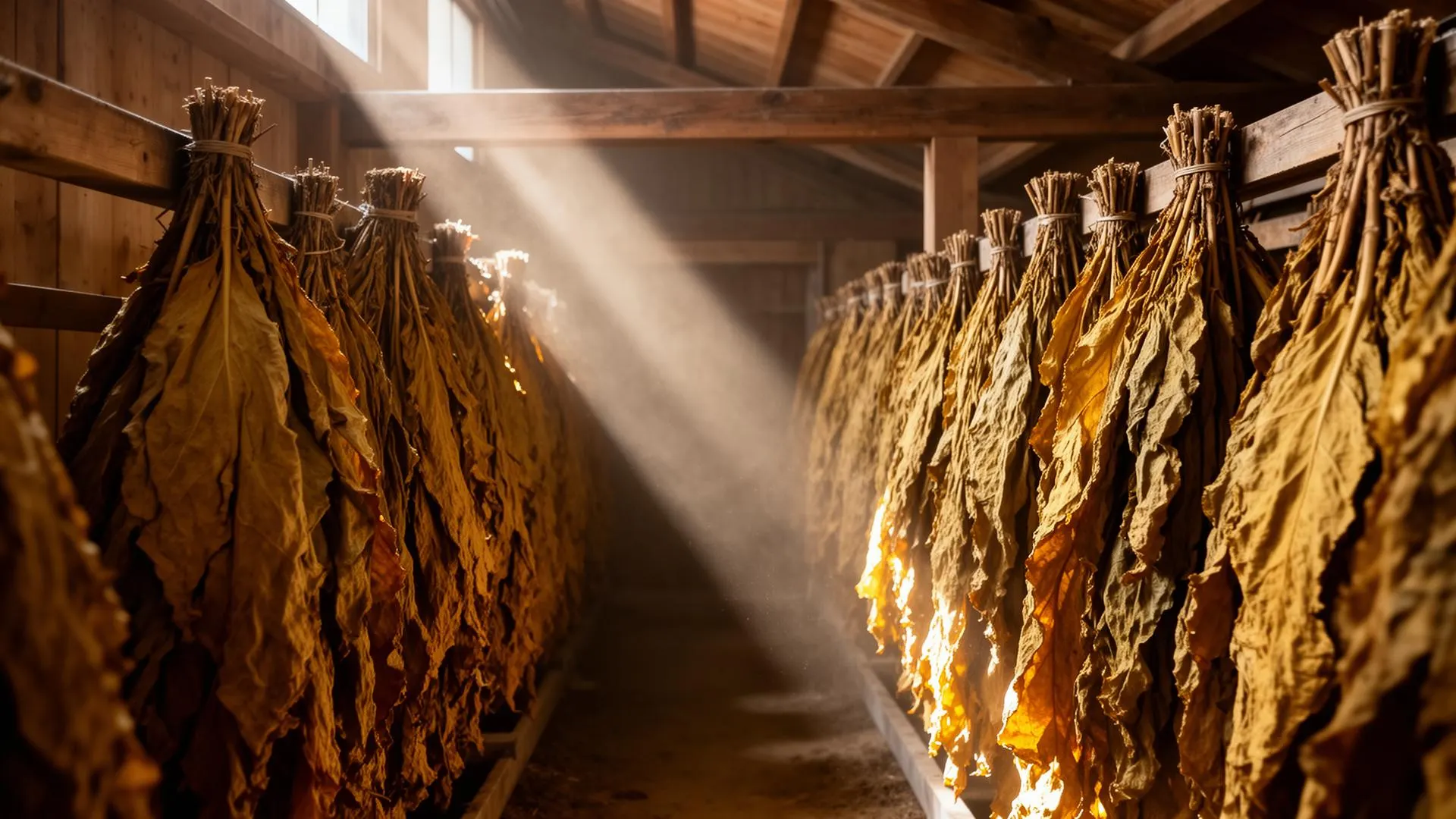
There is a room in our manufactory in which you see almost nothing and hear very little. You smell it two doors before you arrive: warm, dark, slightly sweet, with that unmistakable note of hay, bread and plum. That is where the fermentation stacks rest - and where it is decided whether a good harvest becomes a memorable tobacco.
What fermentation actually is
Freshly harvested tobacco leaf is barely usable. It contains residual starch, protein, ammonia precursors, large amounts of chlorophyll and sharp bitters. Smoke or chew it now and the flavour would be biting and unbalanced.
Fermentation is the biochemical process that converts those raw materials into aroma. Unlike wine or beer, no yeasts are at work here, but mainly aerobic microorganisms and the leaf's own enzymatic reactions. They break starch into sugar, protein into amino acids and finally into those Maillard compounds that produce the characteristic scent of aged tobacco.
Three paths - and why only one convinces
Quick method: 4 to 8 weeks
Industry often "ferments" tobacco in closed chambers under controlled heat (45-55 °C) with added ammonia or enzymes. Fast, predictable - and it strips the leaf of its individuality. What remains is a homogeneous, neutral base.
Hot fermentation: 3 to 6 months
In Cavendish-style processes, stacks are pressed and held under pressure and heat. It produces dark, soft tobacco with sweetness - at the cost of complexity.
Natural storage fermentation: 12 to 36 months
Our path. Leaves are set into stacks, restacked regularly, controlled for temperature (ideally 38-46 °C) and moisture (65-72 %). Little is visible and everything is felt.
Every week we grant nature replaces a year in the lab.
What happens in the stack
- Ammonia breakdown: the sharpest nitrogen compounds escape or are bound. The tobacco becomes mild.
- Pectin cleavage: cell walls loosen, the leaf turns supple, burns more evenly.
- Maillard reaction: amino acids and residual sugar create caramel, cocoa and nut aromas.
- Polyphenol oxidation: the colour deepens from yellow-green to chestnut brown.
Why Swiss tobacco benefits in particular
Tobacco from the Broye or from a sun-facing Ticino slope brings less sugar with it by nature than, say, Virginia from North Carolina. Precisely for that reason it tolerates - and needs - the long, cold fermentation. What would quickly turn brittle in hotter climates gains depth and elegance in a Swiss storage shed.
What cannot be sped up
We know that technique can do a lot. It can hold temperatures, turn stacks, measure moisture. It cannot wait. That waiting - that apparent idleness - is the most expensive, the most honest and ultimately the decisive step.
Anyone who has held it once - a leaf from 24 months of storage, dark and supple, with that quiet, almost warm scent - understands why in our manufactory we would rather wait a year longer than sell a step too early.